Mentaiko: The Bold Japanese Delicacy Transforming Everyday Dishes

Many home cooks struggle to add deep, restaurant-quality flavor to simple meals without spending hours in the kitchen. The solution lies in discovering powerful, ready-to-use ingredients that deliver instant umami. Mentaiko is one such ingredient—a bold Japanese delicacy that can transform ordinary dishes into something unforgettable with minimal effort.
What Is Mentaiko?
Mentaiko refers to marinated pollock roe, a popular ingredient in Japanese cuisine known for its salty, slightly spicy, and umami-rich flavor. The roe is typically cured with salt and chili, giving it a vibrant red color and a distinctive kick.
Originally influenced by Korean cuisine, mentaiko has evolved into a staple in Japan, especially in regions like Fukuoka. It is often sold in sacs and can be eaten raw, lightly cooked, or mixed into sauces.
The taste profile is unique—briny, creamy, and mildly spicy—making it incredibly versatile in both traditional and modern recipes.
Mentaiko Eng: Meaning and Global Interest
The term mentaiko eng often appears in online searches as people look for English explanations or translations of Japanese content related to mentaiko. In English, mentaiko simply translates to “spicy cod roe” or “pollock roe.”
As Japanese cuisine continues to gain global popularity, more people are exploring ingredients like mentaiko, leading to increased searches for its meaning, usage, and recipes in English-speaking regions.
Origins and Cultural Significance of Mentaiko
Mentaiko has roots in Korea, where a similar dish called myeongnan-jeot exists. It was introduced to Japan in the early 20th century and later adapted to suit Japanese tastes.
Today, mentaiko is especially famous in Fukuoka, where it is considered a regional specialty. It is commonly served with rice, used as a filling for rice balls (onigiri), or incorporated into pasta dishes.
Beyond its culinary use, mentaiko represents the blending of cultures and the evolution of traditional foods across borders.
Mentaiko Pasta: A Modern Japanese Classic
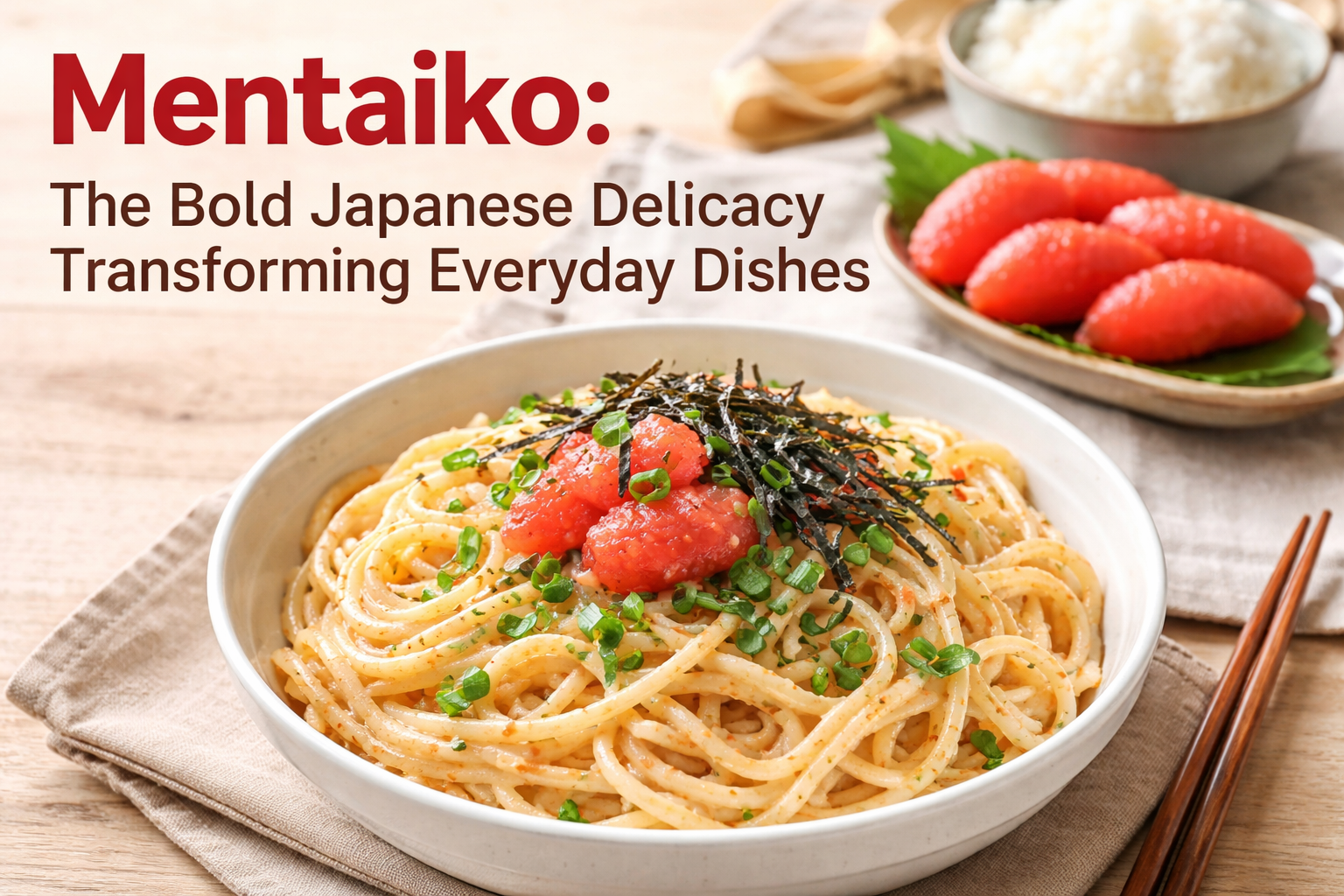
One of the most popular dishes featuring mentaiko is mentaiko pasta. This fusion dish combines Italian pasta with Japanese flavors, creating a creamy, savory meal that’s both simple and satisfying.
Why Mentaiko Pasta Is So Popular
- Quick and easy to prepare
- Requires minimal ingredients
- Offers a unique umami flavor
- Perfect balance of creamy and spicy
Basic Ingredients for Mentaiko Pasta
- Spaghetti or any pasta of choice
- Mentaiko (pollock roe)
- Butter or olive oil
- Cream or milk (optional)
- Soy sauce
- Seaweed (nori) and green onions for garnish
Simple Cooking Method
Cook the pasta, mix mentaiko with butter and a splash of pasta water, then toss everything together. The heat gently cooks the roe while preserving its texture and flavor.
How to Use Mentaiko in Everyday Cooking
Mentaiko isn’t limited to pasta. Its versatility makes it a great addition to many dishes.
Popular Ways to Use Mentaiko
- Spread on toast for a savory breakfast
- Mixed into rice for a quick meal
- Added to omelets for extra flavor
- Used as a topping for sushi or rice bowls
- Blended into dips or sauces
Its bold taste means a little goes a long way, making it both economical and impactful.
Nutritional Value of Mentaiko
Mentaiko is not only flavorful but also packed with nutrients.
Key Nutrients
- High in protein
- Rich in omega-3 fatty acids
- Contains vitamins like B12
- Provides essential minerals
However, it is also high in sodium, so it should be consumed in moderation, especially for those watching their salt intake.
Mentaiko Eng Manga and Cultural References
The keyword mentaiko eng manga reflects growing curiosity about how mentaiko appears in Japanese pop culture, particularly in manga and anime.
Food plays a significant role in storytelling within Japanese media. Mentaiko often appears in slice-of-life manga, cooking-themed stories, and even casual scenes, highlighting its everyday importance in Japanese households.
For international fans, English-translated manga (often referred to as “eng manga”) helps bridge the cultural gap, making foods like mentaiko more accessible and understood globally.
Understanding “Mentaiko Priapus Eng” Searches
The phrase mentaiko priapus eng appears in niche search queries, often linked to adult or specialized manga content. While the term itself combines unrelated elements, it shows how keyword variations can emerge from specific online communities.
From an SEO perspective, including such variations helps capture diverse search intent, even if the primary focus remains on the culinary and cultural aspects of mentaiko.
Where to Buy Mentaiko
Mentaiko is widely available in:
- Asian grocery stores
- Japanese specialty markets
- Online food retailers
It is usually sold refrigerated or frozen. When buying, look for fresh color, firm texture, and proper packaging.
Tips for Storing and Handling Mentaiko
- Keep refrigerated and consume within a few days
- Freeze for longer storage
- Avoid overcooking to preserve texture
- Remove the outer sac if a smoother texture is needed
Proper handling ensures you get the best flavor and quality from your mentaiko.
Why Mentaiko Is Gaining Global Popularity
Several factors contribute to the rising popularity of mentaiko:
- Increased interest in Japanese cuisine
- Social media food trends
- Easy-to-make recipes like mentaiko pasta
- Unique flavor that stands out from common ingredients
As more people explore international flavors, mentaiko continues to gain recognition as a must-try delicacy.
Common Mistakes When Cooking with Mentaiko
Even though mentaiko is simple to use, a few mistakes can affect the final dish:
- Overheating, which can ruin its texture
- Using too much, leading to excessive saltiness
- Not balancing flavors with butter or cream
- Skipping garnishes that enhance presentation and taste
Avoiding these mistakes helps you make the most of this ingredient.
FAQs About Mentaiko
What is mentaiko made of?
Mentaiko is made from pollock roe that is cured with salt and spices, often including chili for added heat.
Is mentaiko spicy?
Yes, it typically has a mild to moderate spiciness, depending on the preparation.
Can you eat mentaiko raw?
Yes, it is commonly eaten raw or lightly cooked, especially in Japanese dishes.
What does mentaiko taste like?
It has a salty, umami-rich flavor with a slightly creamy and spicy profile.
How is mentaiko different from caviar?
While both are fish roe, mentaiko is seasoned and spiced, whereas caviar is usually served plain and has a more delicate taste.
What is mentaiko pasta?
Mentaiko pasta is a Japanese fusion dish combining pasta with a sauce made from mentaiko, butter, and sometimes cream.
Conclusion
Mentaiko stands out as a bold and versatile ingredient that brings depth and excitement to everyday cooking. From its cultural roots in Japan to its modern interpretations like mentaiko pasta, it continues to capture the attention of food lovers worldwide.
Whether you’re exploring global cuisine or simply looking to elevate your meals, mentaiko offers a simple yet powerful way to transform ordinary dishes into something truly memorable.