Plum Tomatoes: The Ultimate Guide to Flavor, Uses, and Health Benefits

Introduction
Many people struggle to choose the right type of tomato for cooking, often ending up with watery sauces or bland flavors that ruin a dish. The plum tomatoes—a variety prized for their rich taste, low moisture, and versatility. By learning how to use them properly, you can instantly elevate your sauces, salads, and everyday meals with deeper flavor and better texture.
What Are Plum Tomatoes?
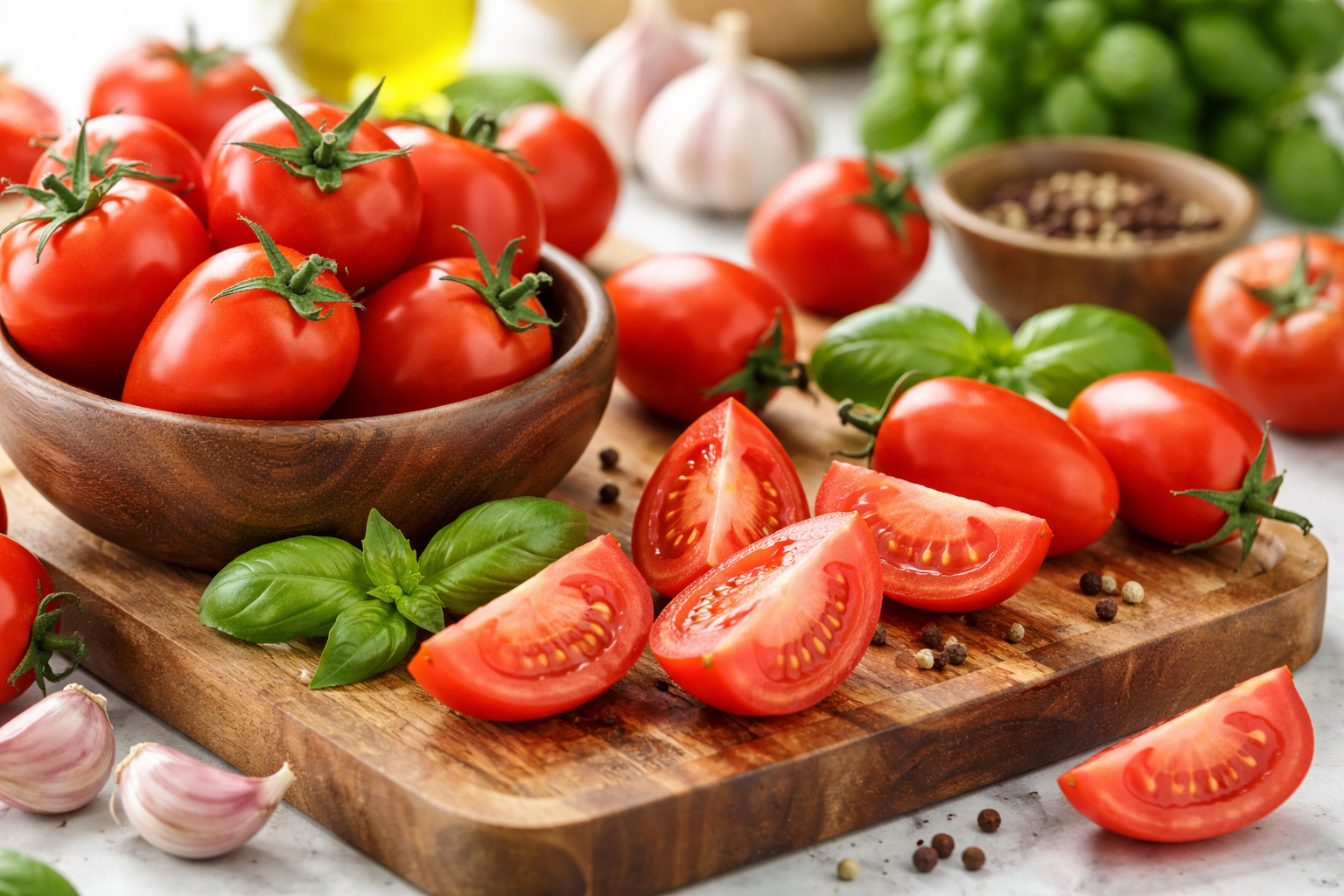
Plum tomatoes are a type of tomato known for their oval shape, firm flesh, and fewer seeds compared to round varieties. They are often referred to as paste tomatoes because they are widely used in making sauces, purees, and pastes.
Unlike juicy slicing tomatoes, plum tomatoes have a dense texture, which makes them ideal for cooking. Their balanced sweetness and acidity give dishes a more concentrated tomato flavor.
Types of Plum Tomatoes
There are several popular varieties of plum tomatoes, each offering unique qualities:
Roma Tomatoes
Roma tomatoes are the most widely recognized type. They are medium-sized, bright red, and commonly used in sauces and canning.
San Marzano Tomatoes
Known for their premium quality, San Marzano tomatoes are sweeter and less acidic. They are often considered the gold standard for Italian cooking.
Baby Plum Tomatoes
Baby plum tomatoes are smaller, bite-sized versions of traditional plum tomatoes. They are perfect for snacking, salads, and roasting due to their naturally sweet flavor and convenient size.
Nutritional Value of Plum Tomatoes
Understanding the nutritional value of plum tomatoes helps highlight why they are a healthy addition to your diet.
Key Nutrients
- Vitamin C – supports immunity
- Vitamin A – promotes eye health
- Potassium – helps regulate blood pressure
- Fiber – aids digestion
- Antioxidants like lycopene – support heart health
Calories in Plum Tomatoes
If you’re watching your diet, you’ll be glad to know that calories in plum tomatoes are very low. On average:
- 1 medium plum tomato contains about 11–15 calories
This makes them an excellent choice for weight management and healthy eating.
Health Benefits of Plum Tomatoes
1. Rich in Antioxidants
Plum tomatoes are packed with lycopene, an antioxidant linked to reducing the risk of chronic diseases.
2. Supports Heart Health
The potassium and antioxidants in plum tomatoes help maintain healthy blood pressure and improve cardiovascular function.
3. Boosts Immunity
High levels of Vitamin C strengthen the immune system and help the body fight infections.
4. Improves Skin Health
The nutrients in plum tomatoes contribute to healthier, glowing skin and may help reduce signs of aging.
5. Aids Digestion
Their fiber content supports gut health and promotes smooth digestion.
Why Plum Tomatoes Are Perfect for Cooking
Low Water Content
Plum tomatoes contain less water than other varieties, making them perfect for thick sauces and pastes.
Rich Flavor
Their naturally concentrated taste enhances the overall flavor of dishes.
Easy to Process
They peel easily and cook down quickly, saving time in the kitchen.
Culinary Uses of Plum Tomatoes
1. Tomato Sauces
Plum tomatoes are the top choice for pasta sauces due to their thick consistency and rich taste.
2. Soups
They add depth and body to soups without making them watery.
3. Roasting
Roasted plum tomatoes bring out natural sweetness and are great as side dishes or toppings.
4. Salads
Fresh baby plum tomatoes are perfect for salads, adding color and flavor.
5. Canning and Preserving
Their firm texture makes them ideal for preserving and storing for long-term use.
How to Choose the Best Plum Tomatoes
When shopping for plum tomatoes, keep these tips in mind:
- Look for firm, smooth skin
- Choose bright, vibrant color
- Avoid soft spots or wrinkles
- Check for a fresh, mild aroma
High-quality tomatoes ensure better taste and nutritional value.
How to Store Plum Tomatoes
Proper storage helps maintain freshness and flavor:
- Keep at room temperature if unripe
- Store ripe tomatoes in the refrigerator
- Use within 5–7 days for best quality
- Avoid stacking to prevent bruising
Plum Tomatoes vs. Regular Tomatoes
| Feature | Plum Tomatoes | Regular Tomatoes |
|---|---|---|
| Shape | Oval | Round |
| Texture | Firm | Juicy |
| Seeds | Fewer | More |
| Best Use | Cooking, sauces | Salads, slicing |
| Flavor | Rich and concentrated | Mild and watery |
Plum tomatoes are clearly the better choice for cooking applications.
Growing Plum Tomatoes at Home
If you enjoy gardening, growing plum tomatoes can be rewarding.
Basic Requirements
- Full sunlight (6–8 hours daily)
- Well-drained soil
- Regular watering
- Support structures like stakes or cages
Harvesting Tips
Pick tomatoes when they are fully colored and slightly firm for the best flavor.
Common Mistakes to Avoid
Using the Wrong Tomato
Using watery tomatoes instead of plum tomatoes can ruin sauces.
Overcooking
Cooking too long can destroy nutrients and flavor.
Improper Storage
Refrigerating unripe tomatoes can affect taste and texture.
Are Plum Tomatoes Good for Weight Loss?
Yes, plum tomatoes are excellent for weight loss due to their low calorie count and high water content. They help you feel full while providing essential nutrients without adding extra calories.
How to Incorporate Plum Tomatoes into Your Diet
- Add to omelets and breakfast dishes
- Blend into smoothies for a nutrient boost
- Use in homemade pasta sauces
- Roast with herbs for a healthy side dish
- Toss into salads for extra flavor
FAQs
What are plum tomatoes best used for?
Plum tomatoes are best used for sauces, soups, and cooking due to their thick flesh and low water content.
Are baby plum tomatoes different from regular plum tomatoes?
Yes, baby plum tomatoes are smaller and sweeter, making them ideal for snacking and salads.
How many calories are in plum tomatoes?
The calories in plum tomatoes are very low, typically around 11–15 per medium tomato.
What is the nutritional value of plum tomatoes?
The nutritional value of plum tomatoes includes vitamins A and C, potassium, fiber, and antioxidants like lycopene.
Can I eat plum tomatoes raw?
Yes, plum tomatoes can be eaten raw, especially baby varieties, but they are most popular for cooking.
Conclusion
Plum tomatoes stand out as one of the most versatile and nutritious ingredients in the kitchen. Their rich flavor, low calorie content, and impressive health benefits make them ideal for both everyday meals and gourmet cooking. Whether you’re preparing sauces, salads, or roasted dishes, incorporating plum tomatoes ensures better taste and improved nutrition. By understanding their uses, benefits, and proper handling, you can make the most of this powerful ingredient and transform your cooking experience.