Mannacote Recipe: Classic Cheese-Stuffed Baked Pasta

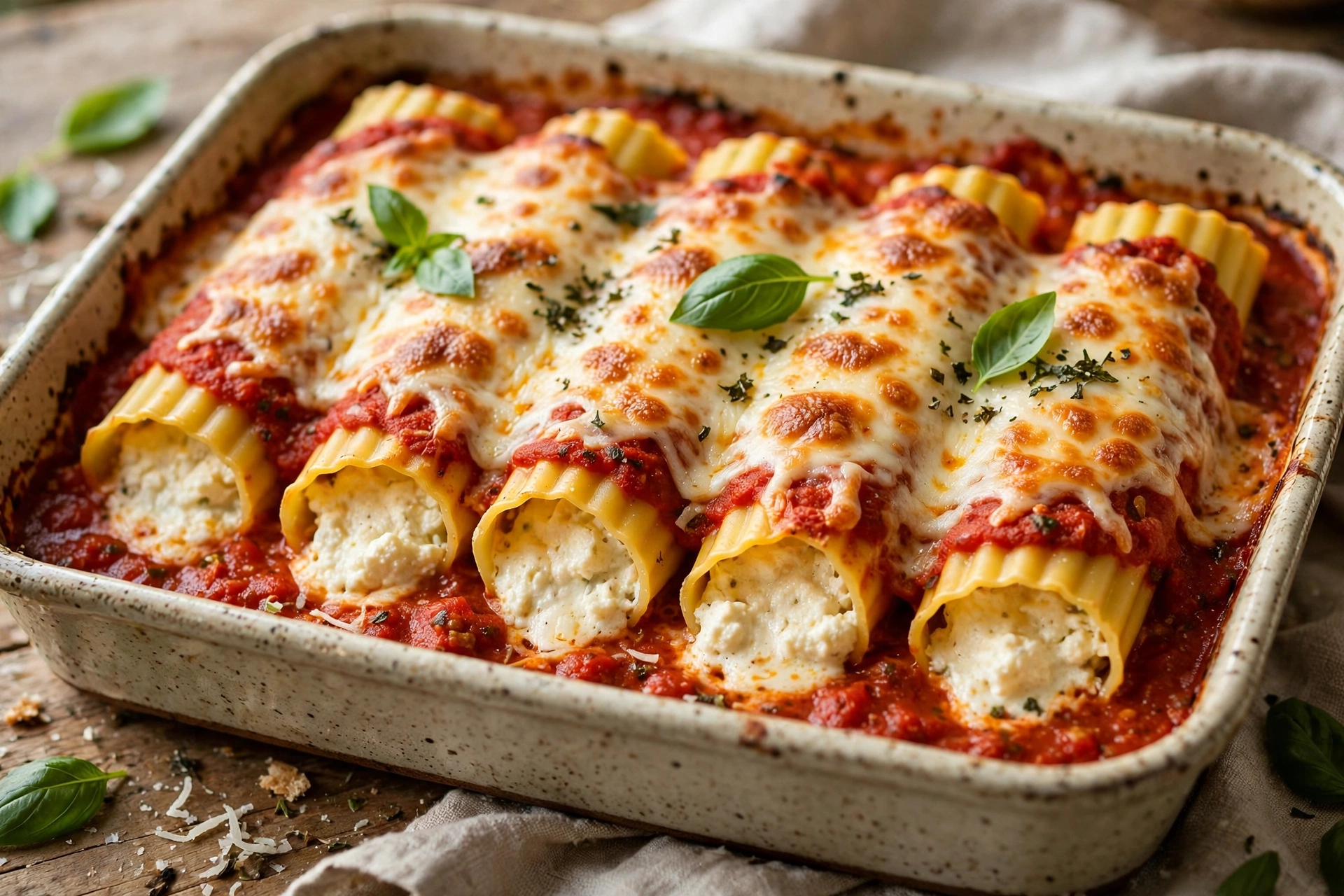
Quick Answer: Mannacote is not a separate traditional dish. It is a dialectal spelling and pronunciation of manicotti — large pasta tubes stuffed with a ricotta cheese filling, covered in tomato sauce, and baked until bubbling. If you can make manicotti, you can make mannacote, because they are the same plate of food under two versions of the same name. This guide gives you one tested recipe for 12 tubes, plus the pasta, filling, sauce, and bake-time tables that make it work every time.
If you found this word on a family recipe card, in an old church cookbook, or typed into a search box, you are not alone. People search for mannacote because that is how the dish was said out loud at home. The spelling followed the sound, and the sound is where the real story starts.
What Mannacote Really Is (and What It Is Not)
In many southern Italian dialects, the final vowel of a word was softened or dropped in everyday speech. Ricotta could sound like “ricott,” mozzarella like “muzzadell,” and prosciutto like “prosciutt.” Manicotti went through the same change. Said quickly at a family table, it landed closer to “mannacote.” When someone later wrote the recipe down the way they heard it, that spelling stuck.
That is the honest answer, and it matters. Mannacote is not a distinct, traditional dish from Southern Italy with its own separate history, filling, or method. Older posts and a few websites present it that way, but there is no meaningful recipe difference behind the claim. No separate sauce, no special tube, and no lost regional technique separates mannacote from manicotti.
What is real is the family variation around the dish. Some families roll thin egg crepes, called crespelle, around the filling instead of using dried pasta tubes. Others use store-bought tubes and keep the filling simple. Amounts were often written by feel — a tub of ricotta, a handful of mozzarella — rather than in exact cups. Those are household choices, not proof of a different dish.
Two other things share a similar name and cause confusion in search results. Manna Cote is also used for coated, slow-release fertilizer products, and similar wording appears for industrial coatings. Neither has anything to do with pasta. If a result talks about months of nutrient release or coating a surface, you have found the wrong mannacote.
So use the name with affection, because it carries how Italian-American families actually spoke. Just cook it for what it is: classic baked manicotti.
Mannacote vs Manicotti vs Cannelloni
Cannelloni is the name that causes the second mix-up. It is a close cousin, not the same dish. This simple comparison keeps the three straight.
| Feature | Mannacote | Manicotti | Cannelloni |
|---|---|---|---|
| What it is | Dialect name for manicotti | Italian-American baked stuffed pasta | Italian stuffed pasta, often from fresh sheets |
| Shell | Same as manicotti | Large ridged dried tubes, or crepes | Smooth tubes or rolled fresh pasta sheets |
| Typical filling | Ricotta cheese filling | Ricotta, mozzarella and Parmesan | Meat, spinach and ricotta, or bechamel-based fillings |
| Sauce | Marinara on top | Marinara, sometimes with bechamel | Tomato, bechamel, or both |
| Difference that matters | Name only | — | Shell style and filling tradition |
In short: order mannacote or manicotti and you should get the same dinner. Order cannelloni and expect a related dish, often smoother, sometimes meat-filled, and more likely to arrive under a white sauce as well as tomato.
The Tested Recipe
Prep time: 25 minutes | Cook time: 45 minutes | Total time: 1 hour 10 minutes, plus 10 minutes resting | Serves: 6 (12 tubes, 2 per serving) | Dish: 9 x 13-inch baking dish
Ingredients:
- 12 manicotti tubes (about 8 oz / 227 g dried pasta)
- 15 oz whole-milk ricotta (425 g, about 1 3/4 cups)
- 1 1/2 cups shredded low-moisture mozzarella (6 oz / 170 g), plus 1/2 cup (2 oz / 57 g) for the top
- 1/2 cup finely grated Parmesan (1.8 oz / 50 g), plus 2 tablespoons for serving
- 1 large egg, lightly beaten
- 2 tablespoons chopped fresh parsley, plus more to serve
- 1 teaspoon Italian seasoning, 1/2 teaspoon garlic powder, 3/4 teaspoon fine salt, and 1/4 teaspoon black pepper
- 3 cups marinara sauce (24 oz / 680 g), divided
- 1 tablespoon olive oil, for the dish if needed
If you want a lighter starting point before you commit to a full tray, compare this version with the easy manicotti recipe from MedlinePlus. It uses a similar cheese filling and shows the same basic method in a simpler form.
Step-by-step:
- Heat the oven and prep the dish. Heat the oven to 375 degrees F (190 degrees C). Spread 1 cup of marinara over the bottom of the baking dish. This layer stops the tubes sticking and keeps their undersides moist.
- Boil the tubes just shy of done. Cook the tubes in well-salted boiling water for 6 to 7 minutes, until just shy of al dente. They should bend slightly but still feel firm. Drain, rinse briefly under cool water so you can handle them, and lay them in a single layer so they do not stick together.
- Mix the filling. Stir the ricotta, 1 1/2 cups mozzarella, Parmesan, egg, parsley, and seasonings until evenly combined. If the ricotta looks wet, drain it first for 20 to 30 minutes in a fine sieve. Taste for salt.
- Fill without tearing. Spoon the filling into a large zip-top bag, snip off one corner, and pipe into each tube from both ends. Fill until plump but not bursting. A small spoon works too, it just takes longer.
- Assemble. Place the filled tubes in a single layer over the sauce. Spoon the remaining 2 cups of marinara over the top, covering the pasta well. Sprinkle with the remaining 1/2 cup mozzarella.
- Bake covered, then uncovered. Cover tightly with foil and bake for 30 minutes. Remove the foil and bake 10 to 15 minutes more, until the sauce bubbles and the cheese is melted and lightly golden at the edges.
- Rest before serving. Rest for 10 minutes. This short wait lets the filling set so the tubes hold their shape when you lift them out. Serve 2 tubes per person with extra Parmesan and parsley.
Which Pasta to Use
All four options below make a good tray. The difference is how much sauce they need and how much work they ask of you before baking.
| Pasta choice | Boil first? | Sauce needed | Best for: |
|---|---|---|---|
| Dried manicotti tubes | Yes, 6-7 min, just shy of al dente | 3 cups | The classic, sturdy result |
| Oven-ready / no-boil tubes | No | 3 1/2 to 4 cups, a little thinner sauce helps | Fastest assembly |
| Fresh pasta sheets, cut and rolled | Brief blanch, 1-2 min | 2 1/2 to 3 cups | A softer, more delicate bite |
| Thin egg crepes (crespelle) | No, cook crepes in a pan first | 2 1/2 cups | The old family style, lightest texture |
Two rules hold for every row. First, dry pasta keeps cooking in the oven, so undercook it slightly on the stove. Second, exposed pasta dries out, so whatever you choose, cover it fully with sauce before the dish goes in.
Broken tube? Do not throw it away. Split tubes can be laid seam-side down in the dish, covered well with sauce, and no one will notice after baking. Save perfect tubes for the top layer if looks matter.
Filling Ratios That Work
A good filling is firm enough to pipe, rich enough to taste of cheese, and seasoned before it goes into the pasta. These ratios are all built for 12 tubes.
| Filling | Ricotta | Mozzarella | Parmesan | Egg | Add: |
|---|---|---|---|---|---|
| Classic cheese | 15 oz (425 g) | 1 1/2 cups | 1/2 cup | 1 | Parsley, Italian seasoning |
| Spinach and cheese | 15 oz (425 g) | 1 1/2 cups | 1/2 cup | 1 | 10 oz spinach, thawed and squeezed very dry |
| Meat and cheese | 12 oz (340 g) | 1 cup | 1/2 cup | 1 | 12 oz ground beef or Italian sausage, browned and drained |
For a reliable weeknight version, start with the classic cheese manicotti ratio above and change only one thing at a time. Spinach must be squeezed until almost no water comes out, and cooked meat must be drained and cooled slightly, or both will loosen the filling and make the finished dish watery.
Which Sauce Goes With Which Filling
Sauce is not just a topping here. It is the cooking liquid for the pasta and the main seasoning for a mild cheese filling, so match it on purpose and use enough of it.
| Sauce | Suits best | How much for 12 tubes | Note: |
|---|---|---|---|
| Marinara | Classic cheese, spinach | 3 cups | The standard choice, bright and balanced |
| Vodka sauce | Classic cheese, meat | 3 cups | Richer, slightly creamy, very forgiving |
| Arrabbiata | Meat, spinach | 3 cups | Adds heat, so season the filling lightly |
| Alfredo | Spinach, chicken-style fillings | 2 1/2 cups, plus a splash of milk if thick | Rich, so serve smaller sides |
| Rose (tomato and cream) | Classic cheese | 3 cups | A middle ground between marinara and Alfredo |
Whichever sauce you pick, put about a third of it under the tubes and the rest over them. A dry bottom layer is the most common reason the first tube sticks and tears on serving.
How Long to Bake
Temperature stays the same. What changes is how long a cold or frozen tray needs to reach a bubbling center. The filling should be steaming hot all the way through before you serve it.
| Starting state | Oven | Covered | Uncovered | Rest: |
|---|---|---|---|---|
| Freshly assembled | 375 degrees F | 30 min | 10-15 min | 10 min |
| Refrigerated overnight | 375 degrees F | 40 min | 10-15 min | 10 min |
| Frozen, unbaked | 375 degrees F | 60-70 min | 15 min | 10 min |
For the frozen tray, bake it straight from the freezer in an oven-safe dish, keeping it covered for most of the time so the center heats before the edges dry out. If the top browns too fast at any stage, lay the foil back over loosely for the remaining minutes.
Common Mistakes and How to Fix Them
- Watery ricotta, watery filling — Some ricotta holds a lot of whey. If you mix it straight from the tub, the filling weeps in the oven and pools in the dish. Fix: drain the ricotta in a fine sieve for 20 to 30 minutes, and squeeze thawed spinach until it feels dry.
- Overcooked tubes that tear — Fully boiled tubes split when you fill them and turn soft after baking. Fix: boil for 6 to 7 minutes only, just shy of al dente, handle them gently, and lay them in a single layer while they wait.
- Overfilling — A tube packed until it bulges will burst as the cheese expands. Fix: fill until plump, not tight, and stop when a little resistance builds. A piping bag gives you far more control than pushing filling in with a spoon.
- Too little sauce — Dry, chewy edges almost always mean bare pasta went into the oven. Fix: sauce under the tubes, sauce over the tubes, and no exposed pasta. For no-boil tubes, use the extra sauce listed in the pasta table.
- Cutting and serving too soon — Served straight from the oven, the filling runs and the tubes slide apart. Fix: rest the dish for 10 minutes. It will still be hot, and each serving will hold together on the plate.
What to Serve With It
For 6 people, keep the rest of the meal simple, because the pasta is rich. This plan is enough without turning dinner into a second project.
- Salad: One large green salad with a sharp vinaigrette, or a Caesar salad. Make about 8 to 10 cups in total.
- Bread: One loaf of garlic bread or crusty Italian bread, warmed, for the extra sauce.
- Vegetable side: Roasted broccoli, green beans, or zucchini — one large sheet pan is plenty.
- Wine: A medium-bodied Italian red such as Chianti suits marinara, and a dry Italian white works well with a cream or rose sauce.
- Non-alcoholic: Sparkling water with lemon, unsweetened iced tea, or an Italian soda. Something crisp and not too sweet balances the cheese best.
Put the salad and bread on the table first, serve 2 tubes per person, and keep the baking dish warm for anyone who wants a third. Leftovers reheat well, so do not feel you have to finish the tray.
Storage, Freezing and Reheating
Make ahead: Assemble the whole dish the day before, cover it tightly, and refrigerate it unbaked. The next day, bake it using the refrigerated row in the bake-time table. This is the easiest way to serve it to guests, because all the filling and piping is done in advance.
In the fridge: Get leftovers into the fridge within 2 hours of serving. Store them covered, keep the fridge at 40 degrees F (4 degrees C) or below, and eat leftovers within 3 to 4 days. If food has sat out longer than 2 hours, throw it away rather than reheating it.
Freezing: For the best texture, freeze the dish unbaked. Assemble it in a freezer-safe dish, cover it well with foil, and freeze for up to 2 to 3 months. Bake from frozen using the frozen row in the bake-time table. Baked leftovers also freeze, in portions, though the pasta softens a little more on reheating.
Reheating: For a whole dish or several portions, reheat covered in a 325 degrees F (165 degrees C) oven until steaming hot throughout, about 20 to 30 minutes depending on how much is in the dish. Add a spoonful or two of sauce or water before reheating if the top looks dry. A single portion reheats in the microwave in 2 to 3 minutes, covered, with a short rest before eating.
Nutrition Estimate
The figures below are an estimate for the classic cheese recipe in this guide, per serving of 2 tubes with marinara. Your real numbers will change with the brands of cheese and sauce you use, and with any meat or cream sauce you swap in.
| Per serving (2 tubes) | Estimate: |
|---|---|
| Calories | About 420-520 kcal |
| Protein | About 20-26 g |
| Carbohydrates | About 38-48 g |
| Fat | About 20-28 g |
| Sodium | Varies widely by sauce and cheese |
For a lighter tray, use part-skim ricotta and mozzarella, load the filling with well-drained spinach, and keep the sauce a plain marinara. For a gluten-free version, use certified gluten-free tubes and check your sauce label. The dish is vegetarian as written, and it contains gluten, dairy, and egg, which matters for guests with allergies.
Frequently Asked Questions
- Is mannacote a different dish from manicotti? No. Mannacote is a dialectal spelling and pronunciation of manicotti. The pasta, cheese filling, sauce, and baking method are the same. The name reflects how the word sounded in southern Italian dialect and in Italian-American homes, not a separate recipe.
- Why is it spelled so many different ways? Because it was passed down by ear. Family recipes were often written the way they were heard at the table, and dropped final vowels in dialect turned manicotti into something closer to mannacote. Cookbooks later standardized the spelling as manicotti.
- Can I use crepes instead of pasta tubes? Yes, and many families prefer it. Thin egg crepes, or crespelle, give a softer and lighter result. Fill and roll them seam-side down, cover them well with sauce — about 2 1/2 cups — and bake as in the main recipe.
- Can I make mannacote ahead of time? Yes. Assemble it a day ahead, cover, and refrigerate it unbaked, then add about 10 minutes to the covered bake time. You can also freeze it unbaked for 2 to 3 months and bake it straight from frozen.
- How do I stop the filling from being watery? Drain the ricotta for 20 to 30 minutes before mixing, squeeze spinach until it is very dry, and do not skip the egg, which helps the filling set. Resting the baked dish for 10 minutes also makes a clear difference.
- Is mannacote vegetarian or gluten-free? The classic cheese version here is vegetarian. It is not gluten-free as written, because the tubes are wheat pasta, but certified gluten-free tubes work the same way. Always check sauce and cheese labels if you are cooking for someone with an allergy.
- Is mannacote the same as Manna Cote fertilizer? No, they only share a similar name. Manna Cote refers to coated, slow-release fertilizer and coating products. It has nothing to do with food. If a page talks about plants, soil, or surfaces, it is not about this pasta dish.