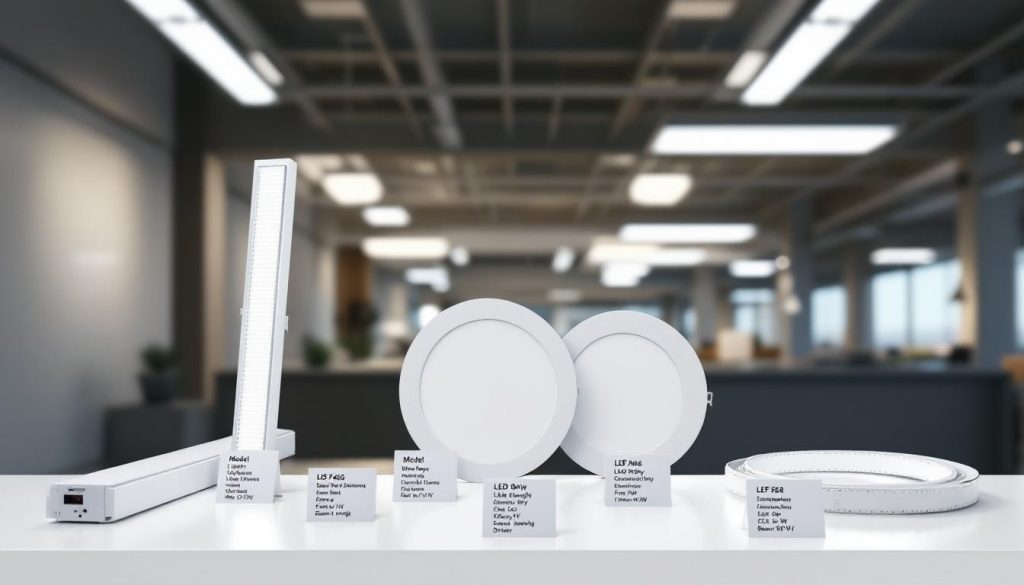

LED lighting has become an essential part of modern commercial, industrial, and architectural projects. From retail displays and signage to office spaces and outdoor installations, the performance of a lighting system often depends on the quality of its components. Choosing suitable LED products requires more than comparing prices. Factors such as efficiency, durability, installation requirements, and long term maintenance all play an important role.
A well designed lighting solution can improve visibility, enhance aesthetics, and reduce energy consumption. As LED technology continues to evolve, businesses and project planners have access to a wider range of options than ever before.
Understanding Modern LED Lighting Systems
An LED lighting system consists of several interconnected components. These may include LED strips, modules, controllers, power supplies, connectors, and mounting accessories. Each component contributes to overall performance and reliability.
For example, LED strips are commonly used for decorative and architectural lighting, while modules are frequently chosen for illuminated signs and channel letters. Controllers allow users to adjust brightness, colors, and lighting effects. Selecting compatible components helps ensure consistent operation and longer service life.
Modern products also offer various waterproof ratings, color temperatures, and voltage options, making it easier to match lighting systems to specific environments and project requirements.
What to Consider Before Choosing LED Strip Products
When selecting LED strip lighting, several technical factors should be evaluated. Brightness output, power consumption, color rendering, and installation conditions can all affect results.
Many commercial projects require waterproof solutions. Products with IP65, IP68, or similar ratings provide protection against moisture and environmental exposure. In outdoor applications, waterproof performance becomes particularly important for maintaining reliability over time.
The choice between 12V and 24V systems is another key consideration. A 24V system generally experiences less voltage drop, allowing for longer continuous runs while maintaining consistent brightness. This makes 24V solutions suitable for larger installations where uniform illumination is important.
In addition, COB LED technology has gained popularity because it produces smooth, continuous light without visible hotspots. Compared with traditional SMD strips, COB products often deliver a cleaner visual appearance and simplified maintenance.
How LED Strip suppliers Support Project Requirements
Working with experienced LED Strip suppliers can help project managers source products that align with technical specifications and installation demands. Reliable suppliers often provide a broad range of lighting solutions designed for commercial, industrial, and decorative applications.
For instance, 5050 LED strips are frequently used in cove lighting, architectural lighting, signage backlighting, and decorative event lighting. Some models feature 300 LEDs per 5 meter reel, a viewing angle of 120 degrees, and waterproof options such as IP65 and IP68. RGBW versions can combine RGB lighting with warm white illumination, providing greater flexibility for lighting designers.
Free cutting COB LED strips have also become increasingly popular because they help overcome installation constraints that may arise in projects with complex layouts. Their ability to adapt to custom dimensions can simplify installation and reduce material waste.
Common Applications of LED Module Technology
Another important component in many lighting projects is the LED Module. These compact lighting units are widely used in illuminated signage, channel letters, display cabinets, advertising light boxes, and decorative architectural elements.
Modules are valued for their ability to provide concentrated and consistent illumination in confined spaces. Their compact size allows them to fit inside letters, logos, and display structures where traditional lighting solutions may be difficult to install.
RGB module solutions are also commonly used in shopping malls, retail environments, entertainment venues, and decorative outdoor projects. Depending on the design, modules can support dynamic color effects that enhance visual impact while maintaining energy efficiency.
Comparing LED Strips and LED Modules
Although LED strips and modules both use LED technology, they serve different purposes.
LED strips are generally preferred when continuous linear lighting is required. They work well for under cabinet lighting, architectural accents, contour marking, and decorative applications. Their flexibility allows them to follow curves and irregular surfaces.
LED modules, on the other hand, are designed to provide focused illumination in specific locations. They are often selected for signage and advertising displays where even light distribution across a limited area is important.
The choice between the two depends on project goals, installation conditions, and desired lighting effects.
Factors That Improve Long Term Performance
Long term lighting performance depends on more than the LED product itself. Proper power supply selection, thermal management, and installation practices all contribute to reliability.
Before installation, power requirements should always be verified to ensure compatibility with the lighting system. Incorrect voltage selection can negatively affect performance and lifespan.
Quality materials also make a difference. Copper PCB options, strong adhesive backing, and durable waterproof protection can help maintain stable operation in demanding environments. Products designed for frequent switching and extended operating hours are often better suited for commercial applications.
Industry Experience and Product Development
Since its establishment in 2014, Shenzhen Dekingled Co., Ltd. has focused on the development and manufacturing of LED lighting products for various applications.
The company operates from the 4th Floor, Building C, SanMing Industrial Park, Shiyan Town, Bao’an District, Shenzhen, China, and provides technical support along with product solutions for different lighting requirements.
Future Trends in LED Lighting Technology
The LED lighting industry continues to move toward greater efficiency, improved durability, and smarter control systems. Advanced COB technology, enhanced waterproof protection, and intelligent controllers are becoming increasingly common across commercial and industrial projects.
As lighting requirements become more specialized, selecting suitable components remains essential for achieving reliable performance, energy efficiency, and long term value. By understanding the strengths of different LED products and evaluating project specific needs, businesses can make informed decisions that support successful lighting installations.